Keeping a New Jersey basement dry is a year-round job because each season attacks your foundation differently. Spring brings rain and thaw, summer brings humidity, fall clogs your drainage with leaves, and winter freezes water inside foundation cracks. A short checklist each season prevents most of the damage.
These tips reduce your risk, but they support a real system rather than replace one. If water is already getting in, the fix is professional basement waterproofing. Here is what to do each season and how to tell when a task has moved from maintenance to a job for a specialist.
Use this table as your year-round schedule, then read on for how to do each task and why it matters.
Season | Top tasks | Why it matters |
|---|---|---|
Spring | Clean gutters and downspouts. Inspect walls and floors for new cracks. | Rain and thaw raise groundwater fast, and winter leaves new cracks behind. |
Summer | Track humidity. Test the sump pump monthly. | Humid air feeds mold, and summer storms are when the pump earns its keep. |
Fall | Clear leaves from drainage. Seal gaps before the first freeze. | Clogged gutters dump water at the foundation, and open gaps become winter cracks. |
Winter | Protect pipes from freezing. Keep melting snow moving away from the house. | Burst pipes and trapped snowmelt are the two big winter flood sources. |
Spring is when winter sends you the bill. Two tasks cover most of the risk.
Spring is also the season when a failing system shows itself. If the basement smells musty or the walls feel damp after the first warm rains, groundwater is getting through, and no amount of gutter cleaning will stop it.
Summer threats are quieter: humidity in the air and the one storm that tests your sump pump.
A pump that fails its bucket test in July will fail a thunderstorm in August. Summer is the season to fix it on your terms.
Fall is preparation season. The goal is simple: enter winter with clear drainage and a sealed foundation.
Anything you seal in October is a crack that cannot fill with water and freeze in January. That is the whole strategy.
Winter water damage comes from two directions: pipes inside and snowmelt outside.
Seasonal maintenance controls the water around your home. It cannot stop groundwater that is already pushing through the foundation from below, a force called hydrostatic pressure, which is the sideways and upward push of saturated soil against your basement walls and floor.
If the musty smell returns, the walls stay damp, or water appears after storms no matter how clean your gutters are, the problem is past the DIY stage. Our guide on why you should never ignore a leaky basement shows how fast small leaks turn into structural and mold problems.
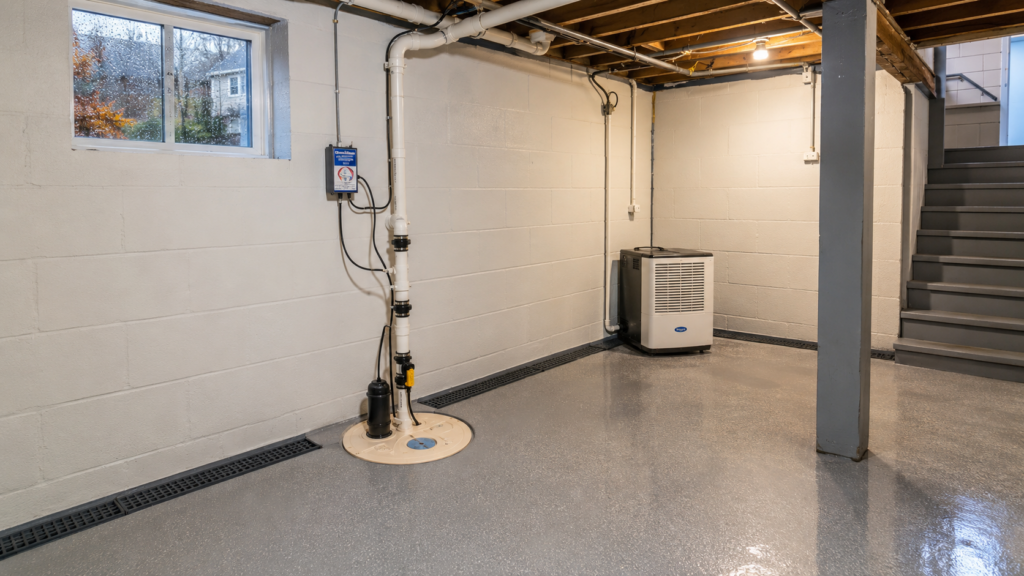
A professional system solves it at the source with an interior drain, a sump pump, and a battery backup, installed by an in-house crew with the owner on every job and backed by a 100 percent lifetime transferable warranty. Schedule a free inspection, and a specialist will honestly tell you whether maintenance is enough or a system is needed.
At least once per season. Look for new cracks, water stains, efflorescence, and musty smells, and test the sump pump monthly during storm season. Four short checks a year catch most problems while they are still cheap.
At least 4 to 6 feet from the foundation. Water released at the base of the wall soaks straight down to the footing and builds pressure against the basement. Extensions are one of the cheapest waterproofing upgrades available.
The EPA recommends keeping indoor humidity below 60 percent, ideally between 30 and 50 percent. If a dehumidifier cannot hold that range, moisture is entering from the ground and the basement needs more than air treatment.
Pour a bucket of water into the pit and confirm the pump activates, discharges the water outside, and shuts off. Do this monthly in storm season, and clean the pit and discharge line while you are there.
Efflorescence is the white, chalky mineral salt left on basement walls when water evaporates through concrete. It is not mold, but it is proof that water is moving through the wall and worth a professional look.
Hairline cracks can be patched with masonry sealant or hydraulic cement. Cracks that are wide, growing, horizontal, or leaking need a professional, because they signal water pressure or structural movement that a surface patch will not fix.
Wrap exposed pipes with foam insulation sleeves or heat tape, keep the basement above freezing, and let faucets drip during extreme cold. Burst pipes are one of the most common causes of winter basement flooding in New Jersey.
Standard policies generally do not cover flooding or groundwater seepage. Some water damage from burst pipes may be covered, but seepage is excluded, which is why preventing the water beats filing the claim.
No. Maintenance controls the water around the home, but it cannot relieve groundwater pressure pushing through the foundation. If moisture keeps returning, a professional interior system is the long-term fix.
Call when the musty smell keeps returning, walls stay damp, cracks grow or leak, or water appears after storms despite clean gutters and a working pump. A free inspection identifies whether maintenance is enough or a system is needed.