When frozen ground begins to thaw in early spring, water pressure increases around your foundation. Addressing cracks and moisture issues during winter helps prevent that runoff from finding its way inside.
Many New Jersey residents wait until spring to address basement moisture issues, fearing that basement waterproofing is not possible when the ground is frozen. However, interior basement waterproofing and foundation repair are possible during the colder months and often advantageous.
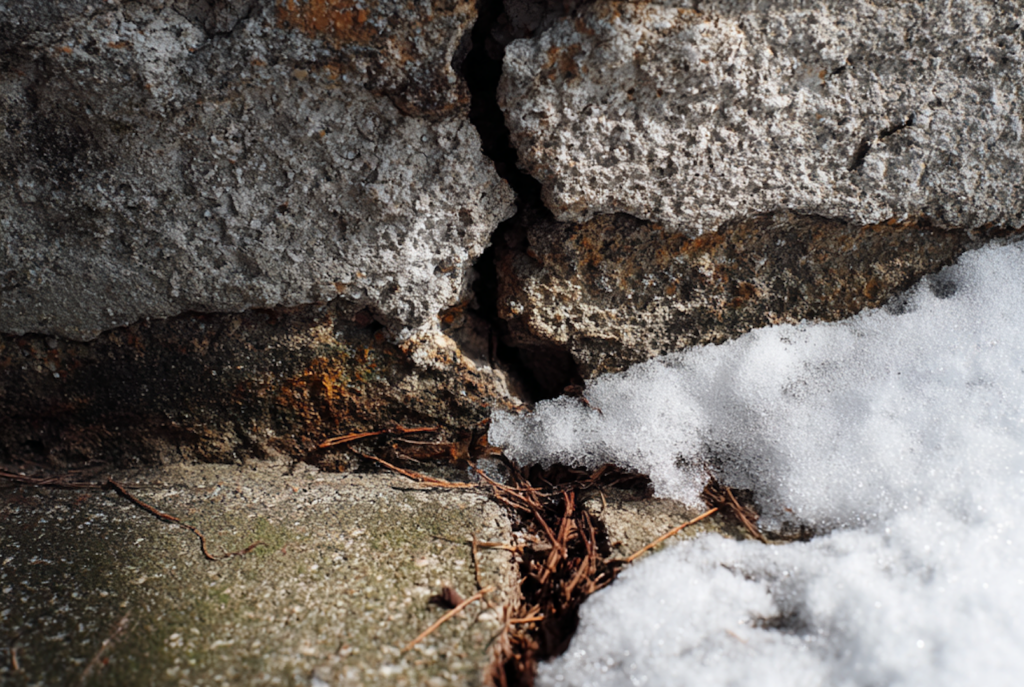
One major risk of waiting through the winter is crack expansion caused by freeze–thaw cycles. When water enters small foundation cracks and temperatures drop, the water freezes and expands. This repeated freezing and thawing causes cracks to widen over time, allowing more water to enter and increasing the likelihood of structural damage and interior leaks by spring.
Addressing water issues before and during winter prevents further foundation crack expansion and prepares your basement to handle the heavy volume of water runoff from snowmelt and rain.
New Jersey winters are frigid and volatile, placing lots of stress on basement walls from expanding soils and water exposure.
Rapid freeze-thaw cycles, especially in the later months of winter, put basements at risk for cracks, leaks, and drainage issues. When snow melts during warmer winter days, water enters the soil around your foundation.
Once temperatures drop again overnight, that moisture freezes and expands, exerting pressure on foundation walls and existing cracks, which then widen over time.
Poor drainage makes the problem worse. When gutters or downspouts clog with leaves or ice, melting snow has nowhere to go. Water pools near the foundation, increasing hydrostatic pressure and pushing moisture through cracks, joints, and porous concrete.
Yes, basement waterproofing can be completed during winter in New Jersey, even when temperatures drop below freezing. The key is understanding how frost depth and building heat affect the soil around your home.
In New Jersey, frost penetration typically reaches about four feet under extreme conditions. However, the soil immediately surrounding a heated home rarely freezes to that depth.
Heat loss from the foundation and basement walls keeps the soil around them warmer than the open ground, allowing exterior drainage systems and foundation repairs to be completed.
Many waterproofing solutions remain effective and practical during the winter, including interior systems, crack repairs, and drainage improvements.
Waterproofing your basement in the winter will proactively address moisture issues that compound during spring thaws and the rainy month of April.
The following are four tips for waterproofing your basement in winter, combining DIY home maintenance with professional waterproofing services.
Sealing foundation cracks is one of the most effective ways to stop basement leaks, and it is essential to seal cracks during winter before they expand with changing temperatures.
Cracks often worsen in cold weather due to the expansion and contraction of concrete. Repairing them early prevents further structural damage and ongoing water intrusion.
Professional waterproofing contractors use materials designed to cure properly in cold conditions. Since the interior foundation wall remains above freezing, crack injections and sealants can bond effectively even when outdoor temperatures are low.
When snow melts, water must be directed away from the foundation quickly to prevent moisture contact with basement walls or moisture intrusion.
Some housekeeping tips we recommend for a dry basement include:
These steps reduce water saturation near the foundation, lowering pressure on basement walls and minimizing leak risk.
Interior drainage systems are effective year-round and can be installed during winter without excavation. These systems collect groundwater at the foundation footing and redirect it to a sump pump before it enters the basement.
Winter is an ideal time to inspect existing systems to address any deficiencies. Cold-weather leaks often reveal weak points in drainage channels, sump pumps, or discharge lines.
Addressing these issues before spring prevents system overload during heavy rains.
Rim joists and utility penetrations are common entry points for cold air and moisture. In winter, condensation forms when warm indoor air meets cold surfaces, increasing humidity and moisture buildup in basements.
Sealing rim joists and gaps around pipes and wiring reduces air leakage and moisture intrusion. This improves basement dryness while also increasing energy efficiency during colder months.
Winter waterproofing offers several practical advantages for New Jersey homeowners, including:
While excavation projects and exterior drains may be difficult to install during cold frosts, interior waterproofing projects often cannot wait until the warmer weather to be addressed.
Some warning signs that indicate that winter waterproofing should not be delayed include:
If you spot any of these signs, contact a local waterproofing company immediately for an inspection.
Our professional waterproofing techs can create a plan to make necessary repairs during the colder months and keep your basement free from moisture once the rainy season arrives and the snow melts.
Yes. Interior waterproofing and crack repairs can be completed year-round, even in freezing weather
Yes. Repairing cracks early prevents freeze-thaw expansion from making them worse and protects your basement during spring thaws.
Yes. Melting snow increases soil moisture and pressure against foundation walls.
Yes. Sump pump systems are installed indoors and are unaffected by frozen ground.
Sometimes, but it depends on soil conditions, excavation depth, and ground temperatures.
Yes. Addressing problems early reduces the risk of water intrusion during spring rains.
Not typically. Faster scheduling and fewer delays can actually reduce overall project time.