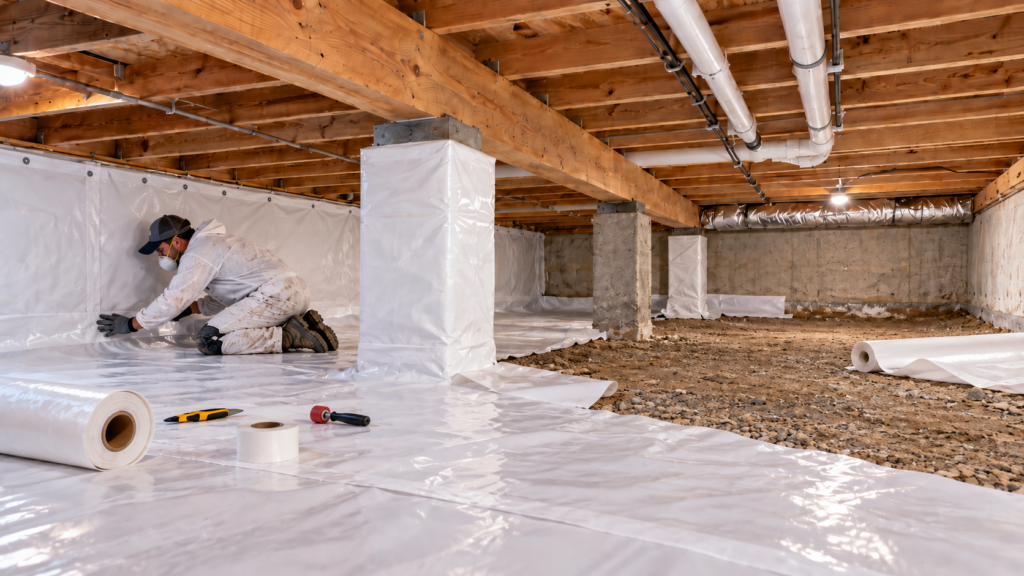
Crawl space waterproofing in New Jersey typically costs about $1,000 to $4,000 for a vapor barrier alone, $2,500 to $8,000 for a drainage system with a sump pump, and $5,000 to $15,000 or more for full encapsulation.
National cost guides such as Angi put the average encapsulation project near $5,500, and New Jersey homes often land in the upper half of those ranges because of clay soils, high water tables, and tight access. The right number for your home depends on the size of the space, how much water it takes on, and whether you need drainage, a sealed liner, or both.
A crawl space is the foundation under part or all of your living space, so moisture there becomes moisture in the house. The same interior basement waterproofing system that keeps a basement dry also works in a crawl space, scaled to the smaller area. This guide lays out the 2026 price ranges, what moves them up or down, how to tell drainage from encapsulation, and how to get a real quote.
Four factors set the price. Each one is something a specialist measures during an inspection, which is why a quote over the phone is a guess and a written quote after a visit is a number.
Factor | Lower cost | Higher cost |
|---|---|---|
Size | A small, single-section crawl space under part of the home. | A full-footprint crawl space with piers, or one that connects to a basement. |
Access | A full-height space with a wide hatch and clear ground. | A tight space under 2 feet high, debris, old insulation, or ductwork in the way. |
Water volume | Humid air and damp soil with no standing water. | Groundwater pooling after storms or a high water table that needs a drain and pump. |
Scope | Vapor barrier or drainage alone. | Full encapsulation with sealed vents, insulated walls, and a dehumidifier. |
Access is the factor homeowners underestimate. A crew that can stand up works twice as fast as a crew working on its back, and that difference shows up in labor. Clearing out failed insulation and debris before the real work starts adds time, too, so a space neglected for years costs more to fix than one that was simply never finished.
Drainage controls liquid water. Encapsulation controls moisture in the air and soil. Many New Jersey crawl spaces need both, but the starting point depends on what is actually happening under your floor.
System | Typical NJ range | Best fit |
|---|---|---|
Vapor barrier only | $1,000 to $4,000 | Dry soil with humid air and no standing water. Blocks ground moisture from evaporating into the space. |
Drainage plus sump pump | $2,500 to $8,000 | Water pooling after rain or a high water table. Collects groundwater and pumps it outside. |
Full encapsulation | $5,000 to $15,000+ | Persistent humidity, mold, or a crawl space you want to condition. Sealed liner, sealed vents, often a dehumidifier. |
Drainage plus encapsulation | $7,000 to $20,000+ | Both liquid water and humidity. The complete fix for the wettest NJ crawl spaces. |
A common mistake is encapsulating a crawl space that still takes on groundwater. The sealed liner traps the water instead of blocking it, and the space ends up wetter than before. If water pools after storms, drainage comes first and encapsulation goes on top of it. A specialist who recommends a liner without checking for standing water is skipping the most important question.
Most crawl space problems announce themselves upstairs before anyone looks below. Watch for these signs, and treat any one of them as a reason to have the space inspected.
If you have fixed obvious leaks and the house still feels damp, the crawl space is the most common culprit. This guide explains why your NJ basement still feels damp after you fix leaks and how moisture keeps returning when the source is below the floor.
New Jersey works against crawl spaces in three ways. The first is soil. Much of the northern and central part of the state sits on clay and glacial till that hold water against the foundation instead of draining it away. Saturated soil pushes water through the foundation under hydrostatic pressure, which is the sideways and upward force of waterlogged ground against walls and floors.
The second is the water table, which rises close to the surface across the Passaic, Rockaway, and Raritan basins and near the state’s many lakes and wetlands. A crawl space floor a few feet below grade can sit at or below the water table for weeks after a wet season. The third is grading and drainage around the house. Downspouts that dump at the foundation and yards that slope toward the home send roof water straight into the crawl space.
The U.S. Department of Energy’s Building America guide to crawl space moisture lists the usual causes: water entering from rain or snowmelt, leaks, a failed dehumidifier, and a torn, poorly installed, or missing vapor barrier. Every one of those is common in older New Jersey homes.
A roll of 6-mil plastic from the hardware store costs a few hundred dollars, and it helps in a dry crawl space with humid air. It does not help in a wet one. Plastic laid on the ground does nothing to stop groundwater, and if it is not sealed to the walls and piers, it traps moisture underneath while letting humid air around the edges.
A professional system starts with the water source. Drainage goes in first where groundwater collects, a sump pump with battery backup carries it out, and a heavy reinforced liner is sealed to the walls and piers so the whole space is isolated from the soil. Vents are sealed and a dehumidifier is added where humidity is the problem. The waterproofing products page shows the sump pumps, rust-proof composite tanks, and battery backups used in these systems.
The EPA recommends keeping indoor humidity below 60 percent, and ideally between 30 and 50 percent. A crawl space that cannot hold that range with a sheet of plastic on the floor needs more than plastic.
Start with a free inspection. A specialist enters the crawl space, checks the soil for standing water, measures the humidity and the wood moisture, inspects the vents, insulation, and any existing vapor barrier, and locates where water enters. That visit turns the ranges in this guide into a single written number for your home.
Insist on a quote that lists every part and price, names the system, and states the warranty. A lump sum tells you nothing about what you are buying. Ask whether the crew is in-house or subcontracted, whether the owner will be on the job, and whether the warranty is lifetime and transferable to a future owner. Those answers matter as much as the price.
Fall is the right time to act because drier ground makes installation cleaner, and the system is ready before winter moisture returns.
Roughly $1,000 to $4,000 for a vapor barrier, $2,500 to $8,000 for drainage with a sump pump, and $5,000 to $15,000 or more for full encapsulation. New Jersey homes often land in the upper half of those ranges because of clay soils, high water tables, and tight access.
Full encapsulation typically runs $5,000 to $15,000 or more in New Jersey, with national averages near $5,500 according to Angi. The size of the space, access, and whether a dehumidifier and drainage are included set the final number.
Drainage collects groundwater and pumps it out, which solves standing water. Encapsulation seals the space with a liner and closed vents, which solves humidity and soil moisture. Wet NJ crawl spaces often need drainage first and encapsulation on top of it.
Yes for most homes with persistent humidity, mold, or musty air upstairs. It protects the wood structure, improves indoor air, and lowers the moisture that drives mold and pests. It is not a substitute for drainage if groundwater pools in the space.
You can lay plastic in a dry crawl space with humid air, and it will help. It will not stop groundwater, and an unsealed sheet traps moisture underneath while letting humid air around the edges. Standing water needs a professional drainage system.
Musty air upstairs, sagging or bouncy floors, cupping hardwood, visible mold on joists, wet or fallen insulation, condensation on ducts and pipes, and pests. Any one of them is a reason to have the space inspected.
Clay soils that hold water, a high water table, and poor grading or downspouts that dump at the foundation keep New Jersey crawl spaces damp. Saturated soil pushes water through the foundation under hydrostatic pressure.
It does if groundwater pools in the space after storms or the floor sits near the water table. The pump carries collected water outside, and a battery backup keeps it running through the storms that also cut the power.
Most drainage and encapsulation projects finish in one to three days, depending on the size of the space, access, and how much clearing is needed first. A free inspection gives you an exact timeline.
The specific system, every part and price, the timeline, and the warranty terms in writing. Ask whether the crew is in-house, whether the owner is on the job, and whether the warranty is lifetime and transferable to a future owner.