Drainage is the process of removing excess surface water and groundwater from one area and directing it elsewhere. At its core, drainage exists for one simple reason: water always seeks its own level.
After rainfall or snowmelt, gravity naturally pulls water downhill toward streams, rivers, and the sea level.
In many cases, this process happens naturally. In others, because of soil composition, geography, or human development, water does not drain efficiently on its own, leading to backflows that end up in basements.
When that happens, artificial drainage systems are required to move water away before it causes damage.
Gutters and downspouts are the most common forms of drainage on homes, but there are several additional solutions available, from regraded soil to French drains.
Homes in areas like Northern Jersey, which experience higher-than-average rainfall, steep slopes, and varying clay soils, often require additional external waterproofing to prevent moisture buildup that can put pressure on basement walls and lead to leaks.
This guide will explore the basics of external drainage systems, their history, and the best solutions for property owners in North Jersey.
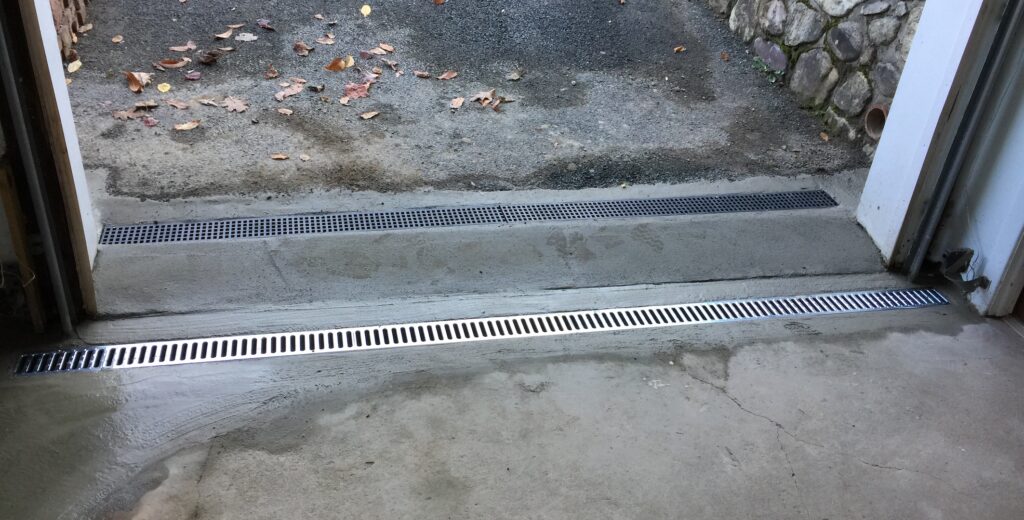
Poor drainage poses several problems for all types of properties in North Jersey, leading to flooding, crop rot, interior mold, and damaged building foundations.
In North Jersey, these risks are amplified by dense clay soils, aging housing stock, heavy seasonal rainfall, and development patterns that disrupt natural water flow.
When water cannot drain away from a property efficiently, it builds hydrostatic pressure against foundation walls, forcing moisture through cracks, joints, and porous masonry.
North Jersey also experiences frequent freeze–thaw cycles, which worsen drainage problems over time.
Saturated soil expands when it freezes, placing additional stress on foundations and exterior walls.
As snow melts or heavy rain follows a freeze, water becomes trapped around the home, increasing the likelihood of basement leaks, foundation movement, and long-term structural damage.
Without a properly designed exterior drainage system, these conditions repeat year after year, compounding repair costs.
Exterior drainage systems address the problem at its source by intercepting groundwater before it reaches the foundation.
Solutions such as perimeter drains, grading corrections, and controlled discharge systems redirect water safely away from the home, reducing pressure on basement walls and preventing moisture intrusion altogether.
To understand the utility of drainage systems, it’s essential to know how they have evolved through time and how they are used today.
A brief timeline of major drainage milestones:
The Dutch example stands out as proof that drainage is not a one-time fix but a system that must work continuously.
By reclaiming land from the sea and maintaining it through pumps and canals, the Netherlands demonstrated how engineering can overcome even extreme water challenges. This idea still applies to flood-prone regions today.
Modern residential drainage in the U.S. owes much to Henry Flagg French, whose work bridged agriculture and home construction.
After a personal tragedy linked to a chronically flooded cellar, French became convinced that wet basements were unhealthy. His research across Europe led to Farm Drainage, a book that revolutionized how Americans think about water management.
The “French drain” is named for him—not France—and reflects his belief that subsurface drainage protects both buildings and the people inside them.
Today’s foundation drainage systems—perimeter drains, sump pumps, and exterior waterproofing—are direct descendants of these historical lessons. While materials and methods have improved, modern systems still follow the same rule discovered thousands of years ago.
Modern drainage systems are designed to control water at different stages: before it reaches the foundation, as it collects around the structure, or after it enters enclosed spaces.
The right drainage solution often involves combining multiple systems to manage both surface water and groundwater effectively.
Drainage design is never one-size-fits-all, especially in North Jersey, where soil composition, elevation changes, and aging housing stock create unique challenges.
Clay-heavy soils common in the region drain poorly, allowing water to linger and build pressure against foundations.
Add in older homes with shallow footings or stone foundations, and improper drainage quickly becomes a structural risk.
The right drainage design starts with understanding where the water is coming from and how it moves across the property.
Roof runoff, sloped yards, neighboring properties, and underground water tables all play a role.
In many North Jersey homes, the most effective approach is a layered drainage strategy.
This may include surface grading and downspout extensions to control rainwater, paired with subsurface drains to relieve groundwater pressure.
In homes with chronic basement water issues, sump pump systems provide reliable protection during heavy storms and seasonal snowmelt.
Long-term performance also matters. Drainage systems must be sized correctly, installed at the proper depth, and designed to handle regional rainfall patterns.
When drainage is designed specifically for the home, soil, and climate, it protects foundations, preserves indoor air quality, and prevents recurring basement moisture problems for decades, not just the next storm.
Exterior drainage stops water before it reaches your foundation, reducing hydrostatic pressure and preventing leaks rather than managing water after it enters the basement.
Many areas have clay-heavy or compacted soils that drain poorly, allowing water to sit against foundation walls instead of percolating downward.
Yes. Improper grading can direct surface water toward the foundation, overwhelming natural drainage and increasing the risk of leaks.
By relieving water pressure around the foundation, exterior drainage reduces cracking, bowing walls, and long-term structural movement.
A sump pump manages water after it enters the basement. Exterior drainage reduces how much water reaches the foundation in the first place, making both systems more effective together.
Yes. Heavy rainfall, snowmelt, and freeze–thaw cycles make consistent drainage essential to prevent recurring moisture problems.
Common options include perimeter footing drains, French drains, regrading, downspout extensions, and exterior waterproofing membranes.
Signs include recurring basement leaks, damp foundation walls, water pooling near the home, foundation cracks, or persistent musty odors.