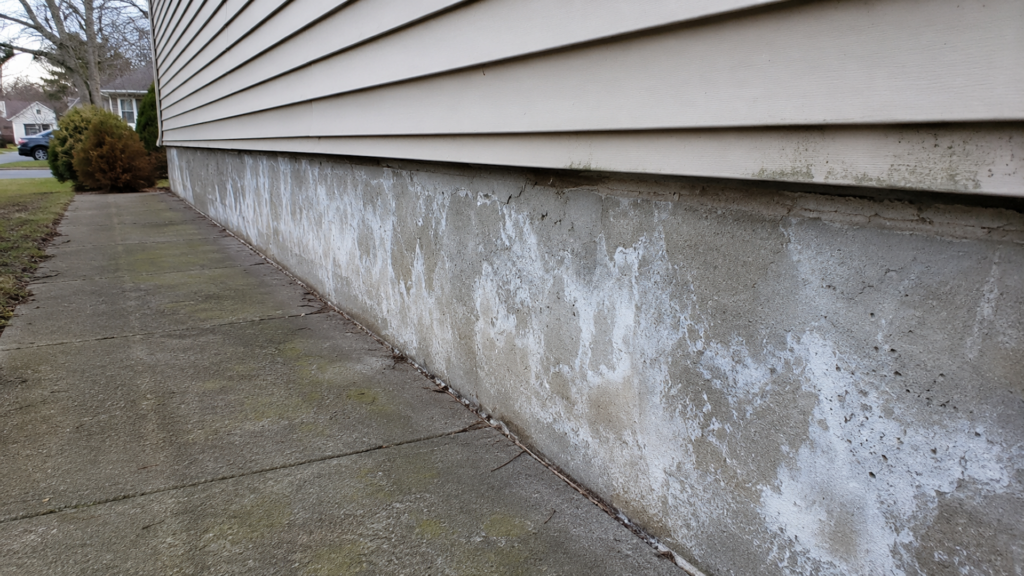
The white powder on your New Jersey basement walls is efflorescence, a deposit of water-soluble mineral salts left behind when moisture evaporates from masonry surfaces.
While the mineral salt itself is harmless, its presence is a direct warning sign that external groundwater is actively pushing through your foundation walls under hydrostatic pressure.
In New Jersey, this issue is particularly common due to the region’s dense clay soils, which retain heavy amounts of water and force moisture into porous concrete block or poured foundations.
If left unaddressed, this continuous water infiltration can lead to worsening moisture problems, mold growth, and eventual structural damage.
Catching efflorescence early can help you avoid potential foundation cracks, leaks, and bowing walls that require significant repair and stabilization to resolve the underlying structural issues.
This guide will decode exactly what your efflorescence patterns reveal about your foundation, and the precise step-by-step remediation sequence required to stop the water and protect your home.
Efflorescence is the crystalline or powdery deposit of water-soluble mineral salts on the surface of concrete, masonry, or brick.
It forms when water moves through the porous structure of the foundation material, carrying dissolved minerals with it, and then evaporates at the surface, leaving the minerals behind as a white or grayish deposit.
The minerals in efflorescence are primarily calcium carbonate, calcium sulfate, and other salts derived from the cement compounds in concrete or mortar.
These are not hazardous materials. But the process that creates them indicates a deeper problem with your waterproofing system.
Primary efflorescence occurs when excess water within the concrete or mortar itself migrates outward during the initial curing period.
This type is common on new construction and often diminishes over time without intervention.
Secondary efflorescence, which is what most New Jersey homeowners are dealing with, occurs when external groundwater continues to push through a cured foundation wall.
Secondary efflorescence does not diminish on its own.
It continues, and typically worsens, as long as the water pressure driving it remains.
The location, pattern, and quantity of efflorescence on basement walls will identify the source of moisture and how it’s acting on your foundation.
In New Jersey, understanding these patterns is important to determining the right waterproofing solution.
The region’s heavy clay soils and seasonal high-water tables create distinct hydrostatic pressure zones that target different vulnerabilities in a foundation.
The table below breaks down the four most common efflorescence patterns found in local basements and what they reveal about your foundation.
Efflorescence Pattern | What It Looks Like | What It Means | Common New Jersey Context |
Lower Wall & Base | Concentrated along the floor-wall joint or the bottom third of the wall. | Water is entering at the footing level due to a rising groundwater table. | The most common pattern in Jersey, occurring when saturated soil forces water up from beneath the foundation. |
Horizontal Bands | A straight line or band of white powder running across the wall at a consistent height. | Indicates a seasonal high-water-table line where water routinely pools and evaporates. | Frequently seen on low-lying properties or areas with dense clay after heavy spring rains and wet winters. |
Vertical Streaks | Trails of white powder bleeding down from a specific crack or mortar joint. | Pinpoints a distinct, isolated structural crack or joint failure where water is actively penetrating. | Makes it easy to locate exactly where targeted repairs, like crack injections, are required. |
Widespread Coverage | Broad, patchy coverage across entire sections of a block foundation. | Generalized water infiltration caused by aged, porous, and failing mortar joints. | Common in block foundations that are 40 to 60 years old, indicating the entire wall assembly has become permeable. |
When homeowners spot white, powdery patches on their foundation walls, they often jump to the worst conclusions.
Since moisture problems in a basement can manifest in several ways, it is incredibly common to confuse harmless mineral deposits with mold or permanent structural failure.
To figure out exactly what is happening in your basement, compare your walls against these three frequently confused issues:
Cleaning efflorescence off the wall may remove the deposit, but does nothing to address the water pressure that created it.
To remediate efflorescence and protect your basement from water exposure, follow these steps.
Start with the outdoor issues you can control immediately.
Clean out clogged gutters, extend downspouts to release water at least six feet away from the house, and regrade the soil so it slopes away from your foundation.
This keeps heavy rainwater from pooling against your basement walls and lowers groundwater pressure during storms.
New Jersey’s dense clay soils often hold onto water long after a storm passes.
If exterior fixes aren’t enough, an active interior perimeter drainage system is required to pump standing water that enters through cracks or footings.
This permanently prevents moisture from carrying mineral salts into your basement.
If your efflorescence pattern shows distinct vertical streaks or highlights specific failing mortar joints, use targeted foundation repairs. Injecting these areas with professional-grade epoxy or polyurethane seals the pathways, blocking water from penetrating those specific gaps.
Only clean the walls after you have controlled the water entry.
Scrub away the loose powder with a dry, stiff brush first.
To remove stubborn, hardened crystals, apply a diluted muriatic acid solution (10% to 15% concentration) to a thoroughly wet wall, scrub, and rinse completely. Always wear full protective gear, including gloves, eye protection, and a respirator.
While cleaning white powder off basement walls removes the visible mineral buildup, permanently stopping efflorescence requires addressing the root cause through proper exterior and interior drainage systems.
No, but it is a major warning sign. Efflorescence itself is just harmless mineral salt, not a structural failure. However, it proves that water is actively pushing through your foundation under pressure. Catching efflorescence early, before visible leaks or cracks appear, is the best time to act.
No, surface fixes will fail. Cleaning removes the white powder, but it does not stop the water from moving behind it. If you apply a waterproof sealant over active efflorescence, the hydrostatic pressure will simply push the coating off and cause it to peel within months. You must fix the exterior or interior drainage conditions before cleaning and sealing the wall.
Not necessarily, but they often go hand in hand. Efflorescence is a mineral deposit, not a living fungus like mold. However, the continuous moisture required to create efflorescence creates the perfect environment for mold to thrive on nearby framing, drywall, and stored items. If you have widespread efflorescence, a professional mold inspection is highly recommended.
It depends entirely on the root cause. For minor DIY fixes, if the moisture is caused by poor exterior drainage, simple fixes like cleaning gutters, extending downspouts, or correcting the soil grade can cost between $100 and $500. For professional interior systems, if the issue requires a subfloor interior drainage system and sump pump, the cost typically ranges from $3000 to over $10000.
Yes, unless you stop the water. If the underlying drainage issue is not corrected, groundwater will continue to pass through the concrete, and the white powdery salts will return during the next heavy rainy season. If your walls remain clear for two consecutive wet seasons after a repair, the water pressure has been successfully relieved.