Nothing wreaks more havoc on your basement walls or foundation than moisture intrusion.
Many homeowners only react once damage becomes obvious: stained ceilings, peeling paint, warped floors, or a flooded basement. But long before these warning signs appear, moisture is often already working its way through structural components, quietly causing deterioration that becomes costly to fix later.
Northern New Jersey homes can suffer from moisture intrusion via flooding, poor drainage from heavy rainfall, or internal condensation.
There’s an old story among roofers about century-old homes with wooden shingle roofs that leaked daylight in dozens of places, yet somehow stayed dry during rainstorms. It sounds far-fetched, but traditional wood shingles naturally expand as they absorb rainwater, sealing small gaps and preventing leaks.
Today’s homes are tighter, more complex, and more vulnerable to moisture intrusion from multiple directions. Small leaks are rarely self-correcting, and when moisture is allowed to linger, it can compromise everything from framing and insulation to indoor air quality.
Understanding how water enters your home and how to stop it is essential to protecting both your property and your investment.
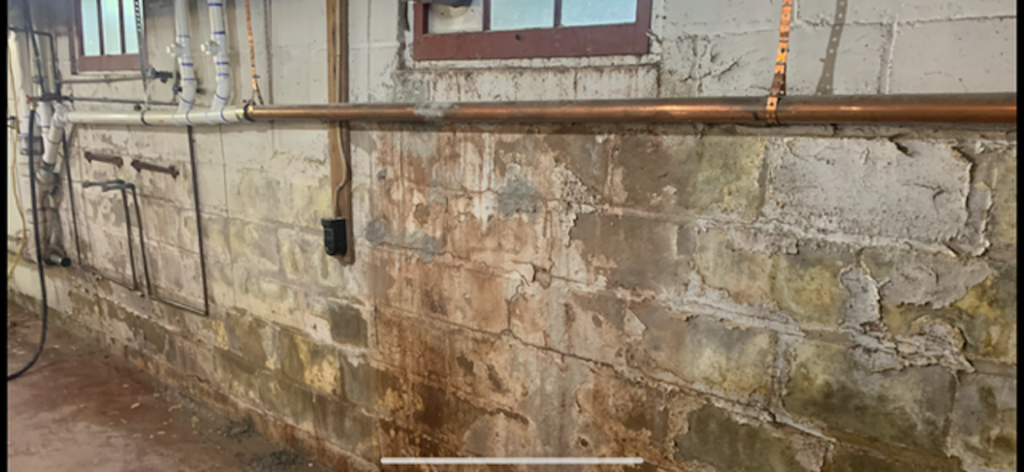
Water doesn’t need to flood a room to cause serious harm to your basement. Slow seepage, condensation, and trapped humidity can weaken materials over time.
Basement leaks hidden by insulation, moisture trapped behind walls, or water wicking up through foundation materials can go unnoticed for months.
Repeated cycles of moisture absorption and drying cause wood joists and beams to swell and shrink. Over time, this movement leads to warping, bowing, and cracking.
Damp wood also creates the perfect environment for mold, mildew, and wood-decaying fungi. In severe cases, dry rot can reduce strong framing members to brittle, powdery material.
Moisture near foundations is particularly dangerous. Damp wood in these areas attracts termites and other pests, compounding structural damage and increasing repair costs.
Basement moisture problems rarely come from a single source. In most homes, damage results from several overlapping issues that allow water to enter, accumulate, or remain trapped over time.
Basement moisture issues are usually caused by one or more of the following factors:
Identifying which of these conditions is present is key to choosing a permanent solution rather than a temporary fix.
Controlling moisture in the basement starts with managing both air movement and humidity.
Poor ventilation allows damp air to linger, increasing condensation on cool foundation walls and floors. Adding properly placed basement vents or improving air circulation helps move moist air out while pulling in drier air, reducing overall humidity levels.
Because basements are often cooler and more enclosed than the rest of the home, natural ventilation alone is rarely sufficient.
Mechanical solutions such as exhaust fans, sealed ducting, or integrated ventilation systems help prevent moisture from becoming trapped. These systems are critical near utility rooms, laundry areas, and basement bathrooms, where humidity levels can spike.
In persistently damp basements, a dehumidifier can provide added protection by actively removing excess moisture from the air. While it won’t stop water intrusion from outside, it can significantly reduce condensation-related damage when used alongside proper ventilation, air sealing, and drainage improvements.
Many water problems originate outdoors and can often be corrected with relatively simple measures.
One of the most overlooked issues is poor drainage around the foundation.
Downspouts that discharge water too close to the house allow moisture to collect at the base of the foundation, increasing the likelihood of seepage. Extending downspouts away from the structure and ensuring proper grading can dramatically reduce basement moisture.
Soil should slope away from the foundation on all sides. Even small depressions near exterior walls can collect water and force it against foundation materials.
When moisture continues to seep through basement walls, interior waterproofing may help. Specialized masonry sealants, waterproof paints, or cementitious coatings can block moisture migration through porous concrete or block walls. These solutions work best for minor seepage rather than active water intrusion.
Some moisture problems are more serious and require aggressive solutions.
High groundwater levels, persistent basement flooding, or chronic foundation seepage often indicate that water pressure is building beneath or around the structure. In these cases, exterior waterproofing is usually the most effective long-term fix.
This process typically involves excavating around the foundation, installing drainage systems such as drain tile, applying waterproof membranes to exterior walls, and backfilling with properly graded soil. While more invasive and expensive, these measures address the problem at its source rather than masking symptoms.
When even exterior drainage systems can’t keep water out, such as in areas with high water tables, sump pumps become the final line of defense. These systems actively collect and discharge water before it can rise and flood the basement, protecting the home during heavy rains or snowmelt.
Moisture damage compounds over time. What starts as a small leak or minor condensation issue can escalate into structural repairs, mold remediation, pest control, and costly renovations.
Early intervention, whether through ventilation improvements, drainage corrections, or targeted waterproofing, costs far less than repairing advanced damage. More importantly, it preserves the integrity of your home and prevents disruptions to daily life.
Water will always find the path of least resistance. The goal isn’t to eliminate moisture entirely, but to control it intelligently before it causes irreversible harm.
Yes. Condensation, hidden seepage, and trapped humidity can cause structural damage long before any visible signs appear.
Musty odors, minor staining, peeling paint, warped wood, or persistent humidity are often early indicators of moisture issues.
Absolutely. Proper ventilation removes moist air before it condenses, reducing mold risk and protecting framing and insulation.
A dehumidifier helps control humidity but won’t stop active water intrusion. It should be used alongside drainage and waterproofing measures.
Ideally, downspouts should direct water at least 6–10 feet away from the foundation to prevent pooling.
Interior sealants work well for minor seepage through porous walls, but won’t solve problems caused by high groundwater pressure.
Not necessarily. Sump pumps are often installed as a preventive measure in areas prone to high water tables or heavy rainfall.