Concrete basement walls in New Jersey are constantly under pressure from groundwater and heavy seasonal rainfall. New Jersey averages 45 inches of rain per year, and much of North and Central Jersey sits on clay-heavy soils that drain slowly.
When that soil becomes saturated, it expands and holds water against foundation walls, creating sustained hydrostatic pressure.
Waterproofing concrete walls prevents structural damage, eliminates mold growth, and protects finished basements from flooding.
Two approaches exist for waterproofing concrete walls:
Exterior waterproofing prevents water from reaching the wall, while interior waterproofing manages water that has already penetrated. Exterior methods work better but cost more and require excavation. Interior methods cost less but only address symptoms, not the source.
This guide explains both methods, when each is appropriate, and what products and techniques produce long-term results in New Jersey conditions.
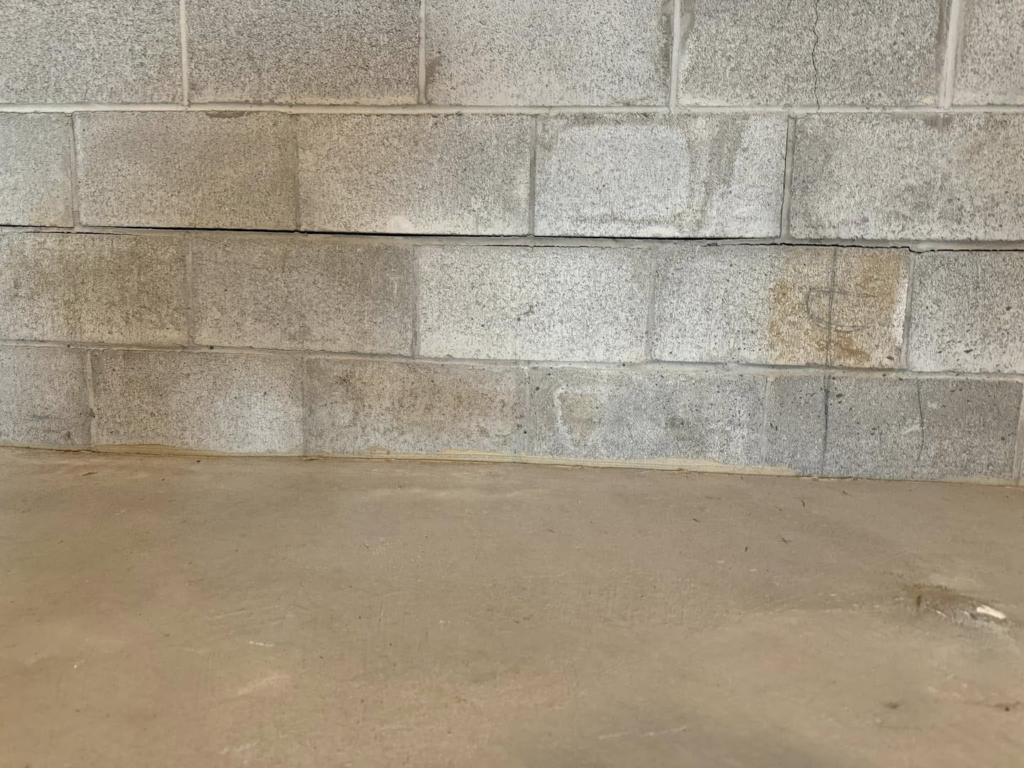
New Jersey’s geology and climate create conditions that force water against foundation walls year-round. The state sits on dense clay soil with poor drainage, particularly in Essex, Bergen, and Middlesex counties.
Water does not percolate through clay; it pools against foundations and exerts hydrostatic pressure that pushes moisture through concrete pores and cracks.
Freeze-thaw cycles worsen the problem. Water enters small cracks in the fall, freezes and expands in winter, and widens the cracks. By spring, those cracks admit significant water flow during heavy rain.
Waterproofing concrete walls combats these risks through multiple coordinated methods. For example, exterior waterproofing membranes prevent groundwater from reaching the foundation wall, while footing drains relieve hydrostatic pressure by redirecting water away from the structure.
Together, these systems reduce wall saturation, prevent efflorescence, limit mold growth, and protect structural integrity. Without intervention, persistent moisture accelerates concrete deterioration, corrodes embedded rebar, and increases the risk of long-term foundation damage.
Exterior waterproofing is designed to prevent water from contacting the foundation wall. This method requires excavating soil around the foundation perimeter to expose the concrete, then applying a waterproof barrier and installing drainage systems.
Exterior waterproofing begins with exposing the foundation wall down to the footing, which in many New Jersey homes can be 7–8 feet below grade.
Once exposed, the concrete surface must be cleaned and evaluated. Any structural cracks or voids should be properly repaired before waterproofing materials are applied.
Unsealed cracks create pathways that allow water to bypass the waterproofing system entirely, undermining long-term performance.
A durable, rubberized asphalt or polymer-modified waterproof membrane is applied to the exterior foundation wall from footing to grade. The membrane must be thick enough to withstand backfill pressure and resist punctures.
In higher-risk areas, drainage boards or dimpled membrane systems are often installed over the waterproof coating. These products create a separation layer that directs groundwater downward toward the footing drain, rather than allowing it to remain in constant contact with the wall.
A perforated drain pipe is installed at the base of the foundation and surrounded by clean aggregate to promote water flow. The system directs groundwater to a sump pump or approved discharge location.
Without pressure relief at the footing level, even high-quality membranes can be stressed by constant hydrostatic force.
The type of backfill and final grading significantly impacts long-term performance. Clean fill material has lower water retention than clay-heavy soil.
Final grading should direct surface water away from the foundation to prevent pooling near the wall.
Interior waterproofing manages water that has already penetrated by channeling it to a drainage system. This approach works when exterior waterproofing is not feasible due to cost, landscaping, or property line constraints.
An interior drain tile system is installed along the interior perimeter at the footing level to direct water into a sump pit for controlled discharge.
When groundwater seeps through foundation walls or rises at the floor-wall joint, the drain tile captures it before it accumulates on the basement floor. Once collected, the sump pump removes the water from the home.
While effective at preventing standing water and flooding, this system does not stop moisture from entering the concrete itself. Water can still migrate through porous foundation walls, contributing to efflorescence, elevated humidity levels, and potential mold growth.
Interior concrete sealers are designed to reduce moisture vapor transmission through foundation walls. They help control dampness but are not engineered to withstand sustained hydrostatic pressure.
The two primary types of sealants used are:
Penetrating sealers typically perform better because they integrate into the concrete matrix rather than sitting on the surface. Topical coatings are more likely to peel or blister if moisture builds up behind them.
Interior sealers are appropriate for minor moisture intrusion or condensation issues. They are not a solution for active water infiltration or foundation cracks under pressure.
For best results, they should be combined with drainage control, dehumidification, and proper ventilation.
A professional waterproofing company explains how water is entering, why the proposed system works, and what results you should expect over time. Education and transparency are signs of proper system design.
Choosing the right basement waterproofing company protects more than just your basement. It protects the foundation, indoor air quality, and long-term value of your home. Taking the time to evaluate system design, local experience, and long-term performance prevents repeat repairs and ensures your basement remains dry under real water conditions.
DIY waterproofing can help with minor dampness, hairline cracks, or basic preventive maintenance. However, professional waterproofing is required for active water intrusion, widening structural cracks, recurring basement flooding, or any project involving excavation.
Exterior waterproofing requires specialized equipment for safe excavation, proper membrane application, and the installation of footing drains.
Incomplete coverage, improper backfill, or poor drainage design can cause early system failure.
Professional contractors also provide written warranties—often ranging from 10 to 25 years—offering long-term protection against future water infiltration.
Interior drain tile systems are equally complex. These projects involve cutting and removing sections of the basement slab, installing sub-floor drainage at the footing level, and integrating a properly sized sump pump system.
Mistakes during installation can damage plumbing lines, electrical conduits, or embedded structural components.
If your basement shows signs of ongoing moisture, foundation cracking, or repeated water intrusion, the safest course of action is to have a professional evaluate it.
Exterior waterproofing with a rubberized membrane, drainage board, and footing drains is the most effective method. It prevents water from reaching the wall and addresses the source of moisture rather than managing symptoms.
Interior drain tile systems work when exterior waterproofing is not feasible, but do not stop water from entering the concrete.
Yes, but interior waterproofing only manages water that has already penetrated the wall. Interior drain tile systems channel water to a sump pump. Interior sealers reduce dampness but fail under hydrostatic pressure. Exterior waterproofing is more effective because it prevents water from reaching the wall.
Yes. Cracks allow direct water entry and must be sealed before applying waterproofing membranes or sealers. Cracks wider than 1/8 inch require epoxy or polyurethane injection. Smaller cracks can be filled with hydraulic cement or flexible sealant. Surface patching without injection does not stop water flow.
Waterproofing prevents water infiltration under hydrostatic pressure. Damp-proofing blocks moisture vapor but fails when water actively flows against the wall. Most new construction in New Jersey uses damp-proofing (tar-based coatings), which deteriorates over time and does not provide adequate protection in high-water-table conditions. True waterproofing requires thicker membranes and drainage systems.
Properly installed exterior waterproofing with rubberized membranes and drainage boards lasts 20 to 30 years or longer. Cheaper spray-applied coatings may fail within 10 years. Longevity depends on membrane quality, drainage system maintenance, and whether footing drains remain functional. Most professional installations include 10- to 25-year transferable warranties.
Waterproofing eliminates the moisture source that allows mold to grow, but it does not kill existing mold. After waterproofing, clean all mold-affected surfaces with appropriate antimicrobial products. Run dehumidifiers to reduce humidity below 60%. Waterproofing prevents future mold growth by keeping concrete dry.