Basement waterproofing in New Jersey costs between $1,200 and $25,000, depending on what your home needs. For most homeowners, the question is not whether their basement leaks, but whether fixing it is worth the investment.
While the upfront costs of waterproofing projects are high, the ROI often justifies the investment over time.
A dry basement protects structural integrity, prevents mold damage, and adds measurable resale value, especially if you plan to remodel a basement in New Jersey.
Remodeling Magazine’s Cost vs. Value report consistently ranks basement remodeling among the highest-return home improvements in the Northeast.
This analysis breaks down exactly what waterproofing costs in NJ, what it returns, and what it prevents. The numbers make the decision straightforward.
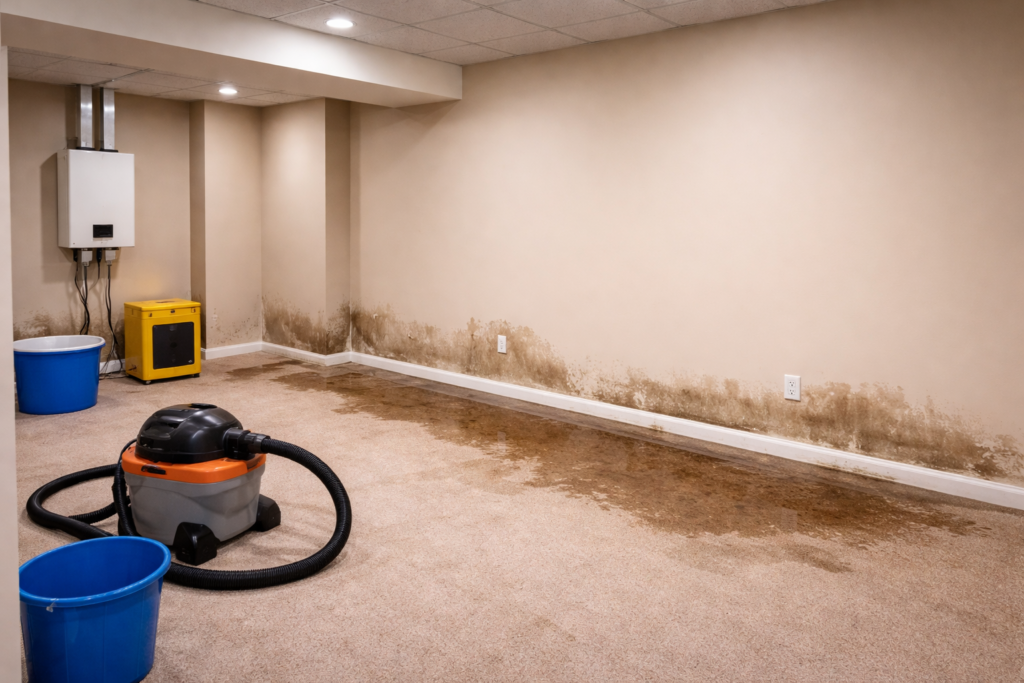
Northern New Jersey’s unique combination of clay-heavy soils, aging foundations, and high water tables creates the perfect environment for hydrostatic pressure that acts on basement walls.
As poorly draining soils saturate after rainfall, the surrounding soil expands and exerts pressure on basement walls, where leaks form, and structures start to bow.
The most common issues that lead to basement leaks and foundation issues caused by water exposure across the Garden State include:
One of the most common issues our inspectors encounter when reviewing basement structures is efflorescence–a white, powdery mineral deposit on the walls. This indicates significant water infiltration on basement walls, but gives customers a false impression that their basement is dry because they don’t see any standing water.
Another indication of hidden moisture exposure is rusted steel window wells and moisture damage to electrical panels, which often go unnoticed for years.
Waterproofing costs in New Jersey vary significantly based on the scope of the problem, foundation type, and method used. The following table provides a breakdown of waterproofing costs by individual services for NJ residential properties.
Waterproofing Type | Avg. NJ Cost | Avg. Home Value Added | Est. ROI |
Interior drainage system | $5,000 – $12,000 | $10,000 – $15,000 | 25% – 75% |
Exterior waterproofing | $8,000 – $20,000 | $15,000 – $25,000 | 25% – 55% |
Sump pump installation | $1,200 – $3,500 | $3,000 – $6,000 | 70% – 150% |
Crack injection/sealing | $500 – $2,500 | $2,000 – $5,000 | 80% – 200% |
Full basement system (combined) | $10,000 – $25,000 | $18,000 – $35,000 | 40% – 80% |
Individual services such as crack injection, foundation repair, or sump pump installation may be necessary to fully waterproof your basement and deliver a higher ROI. However, for basements that suffer from consistent hydrostatic pressure and standing water, a combination of interior and exterior waterproofing solutions may be recommended.
ROI estimates reflect resale value added relative to treatment cost. Actual returns vary by neighborhood, home price tier, and buyer market conditions.
While average price ranges provide a baseline, New Jersey’s diverse architectural history means that no two projects are identical. Several regional variables can shift a project from a standard repair to a complex engineering task.
Additional factors like utility obstructions or homeowner modifications (false double walls are incredibly common) can also incur additional costs to properly waterproof your basement.
In the New Jersey real estate market, waterproofing provides a dual financial benefit: it increases the Direct Appraisal Value of the structure and reduces Transaction Friction during closing.
According to data from HomeAdvisor and the National Association of Realtors, a dry, waterproofed basement adds 10% to 15% to a home’s assessed value on average. For a $400,000 NJ home, that is $40,000 to $60,000 in added value against a treatment cost of $5,000 to $15,000.
The ratio is most favorable when a finished, dry basement is framed as additional livable square footage. In NJ, finished basement space appraises at $50 to $75 per square foot. A 600-square-foot waterproofed and finished basement adds $30,000 to $45,000 in appraised value, often with only a total investment of $15,000 to $25,000, combining waterproofing and finishing.
For sellers, the transaction value of a home is often more critical than the appraisal. A wet basement frequently kills a real estate deal entirely and compromises inspection reports.
According to New Jersey-based LookSmart Home Inspections, water damage is one of the most common reasons for cancelled real estate transactions.
The ROI of waterproofing is best understood through the lens of compounding damage. In the New Jersey climate, water intrusion can compound a small hairline crack today into larger structural issues that require expensive repairs.
The table below illustrates the cost of remediating damage from water intrusion in basements and foundations.
Problem (Untreated) | Average Repair Cost Without Waterproofing |
Foundation crack failure | $5,000 – $15,000 |
Mold remediation | $3,000 – $10,000 |
Finished basement flooding loss | $5,000 – $25,000 |
Structural beam / joist rot | $4,000 – $12,000 |
HVAC / mechanical damage from flooding | $3,000 – $8,000 |
Total potential exposure | $20,000 – $70,000+ |
Not only will you be on the hook for expensive repairs, but you’ll still need to waterproof your basement to avoid future ones.
Waterproofing your basement may seem expensive up front, but the financial benefits recouped once you sell your home and avoid expensive repairs often outweigh the costs.
Be sure to work with a waterproofing company that offers a transferable warranty, like United Waterproofing, which can be moved to a new owner should any issues arise.
Most NJ homeowners pay between $5,000 and $15,000 for a complete interior drainage system with sump pump. Exterior waterproofing ranges from $8,000 to $20,000. Crack sealing and minor repairs can run as low as $500 to $2,500.
and french drain is highly recommended.
Yes. Industry data from HomeAdvisor and the NAR suggest that waterproofing adds 10% to 15% of a home's value on average. In NJ's market, that typically means $30,000 to $60,000 in added value for a mid-range home — well above treatment cost.
A wet basement is the most common deal-killer in NJ home inspections. Waterproofing before listing eliminates buyer negotiation leverage, reduces time on market, and lets you market the basement as a feature rather than a liability.
ROI varies by method. Crack injections and sump pump installations return 80% to 200% in added home value. Full interior systems return 25% to 75% in direct value, but that figure does not account for damage prevention, which easily adds another $20,000 to $50,000 in avoided costs over a 10-year period.
Standard homeowners' insurance does not cover flooding or groundwater intrusion. It may cover sudden water damage from a burst pipe, but persistent basement moisture is treated as a maintenance issue and excluded. Flood insurance through NFIP covers flooding but requires a separate policy and has a 30-day waiting period.
Interior drainage systems last 20 to 30 years with proper maintenance. Sump pumps need replacement every 7 to 10 years. Exterior membranes, when properly installed, last the life of the foundation. Most reputable companies back their work with lifetime warranties.
A vapor barrier is a plastic sheet installed against basement walls or on a crawl space floor to reduce moisture vapor transmission. It is not considered waterproofing.
DIY sealants and paint-on coatings are available but are not a substitute for professional waterproofing. They address cosmetic moisture but do not manage hydrostatic pressure or drainage. In NJ's high-water-table environment, they typically fail within 2 to 3 years. Professional systems are engineered to manage water permanently, not coat over it.