Finding mold in your New Jersey basement indicates a moisture problem due to water exposure with basement walls or floors, or a ventilation problem caused by excess humidity.
Mold spores technically exist everywhere, in every home, at all times. However, toxic black mold (Stachybotrys chartarum) is usually caused by water that remains on drywall or wood for extended periods without drying.
If left untreated, mold exposure can lead to respiratory infections, chronic asthma development, and immune system inflammation, as well as surface damage to drywall and wood.
Mold is extremely common throughout New Jersey, with an estimated 47% of homes experiencing exposure to toxic black mold.
Poor ventilation due to outdated building standards, above-average rainfall across the state, and water intrusion from improper waterproofing all contribute to black mold, which can proliferate for years without notice behind walls and ceiling panels.
This article covers the eight most common causes of basement mold in New Jersey homes, how to identify which one is affecting your basement, and what permanent solutions look like for each.
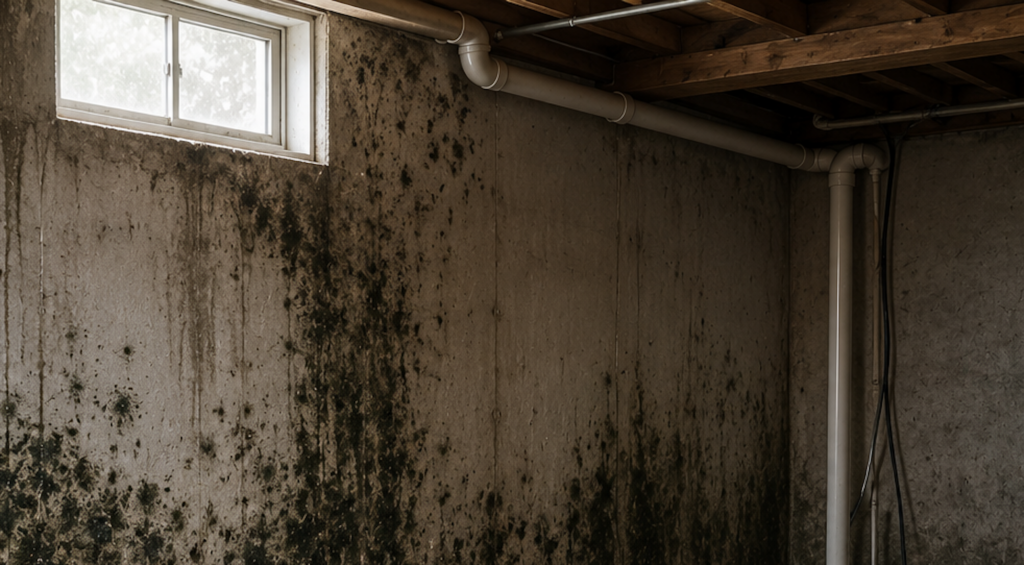
The most common source of mold in New Jersey basements is running ambient humidity well above the threshold at which mold needs to proliferate (60%).
While humidity is most commonly caused by poor ventilation during hot summer days, groundwater seepage from beneath your basement can also contribute to humidity through condensation.
Basements also provide all the organic materials that mold needs to survive: framing, paper-faced drywall, cardboard storage boxes, fabric, and even the dust layer on concrete surfaces.
Since most basements in New Jersey are unfinished and poorly ventilated, they are at heightened risk for mold exposure.
Cleaning visible mold with bleach or antimicrobial solutions is a temporary measure that does not solve the problem. Unless the moisture source driving the high humidity is eliminated, mold will return to the same surfaces within weeks.
From hydrostatic pressure that causes basement water intrusion to common plumbing failures, here are the eight most common causes of basement mold in New Jersey homes.
Water pushing through cracks, blocked wall joints, and the wall-floor junction is the most direct source of moisture for basement mold.
For New Jersey homes built on clay-heavy soils, hydrostatic pressure drives water through any gap in the foundation perimeter whenever the water table rises after rain or snowmelt.
You’ll often see visible water staining at the base of walls, peeling paint, or efflorescence—white mineral deposits that look like powder on the concrete.
Resolving this typically requires a combination of crack repair, a sump pump, and an interior drainage system to redirect water before it ever touches your floor.
Below-grade basement windows with inadequate drainage are a common water entry point in New Jersey homes, particularly after heavy rain events. Window well drains that have silted over, window wells without drainage, or windows with degraded seals all allow water to pool and eventually enter.
Keeping these wells clean, adding protective covers, and ensuring the frames are properly sealed can stop this localized mold growth.
New Jersey’s summer dew points regularly exceed 65 degrees Fahrenheit, meaning outdoor air carries a heavy moisture load from June through September. When this warm, humid air enters through vents or doors and hits cool basement surfaces like concrete or metal pipes, it releases moisture as condensation.
Many homeowners mistakenly open windows to air out the basement, which actually introduces more moisture than it removes. If you see sweating pipes or mold appearing seasonally in the summer without a clear leak, the best fix is a basement dehumidifier set below 55% relative humidity and a reduction in outside air infiltration.
Even the best drainage systems can fail due to mechanical issues, such as a stuck float switch or a frozen discharge line.
In New Jersey, where power outages often accompany the very storms that produce the most rain, a sump pump without a battery backup is a major liability.
When water accumulates in the pit rather than being pumped away, it leads to standing water and rapid mold growth.
Regular inspections, replacing aging pumps, and ensuring you have a secondary power source are essential for keeping the basement dry during a storm.
Not all moisture comes from the outdoors; slow plumbing leaks or dripping HVAC ductwork can add significant moisture without the drama of a flood. A pinhole leak inside a wall can keep drywall wet for months before it’s even noticed.
Similarly, if an air conditioning unit’s condensate drain becomes clogged, that moisture often drains directly into the basement or crawl space.
If you find unexplained damp spots that don’t seem related to rain, check around your pipes and HVAC equipment for leaks or uninsulated cold-water lines that might be dripping.
The ground around your home should slope away from the foundation at a minimum of 6 inches over the first 10 feet.
However, in older neighborhoods, soil often settles over the decades, eventually directing surface water toward the house. This reversed slope is a primary driver of the hydrostatic pressure that forces water through foundation walls.
You can often spot this by looking for pooling water against the exterior walls after a storm.
Fixing the grade, extending downspout discharges at least 6 feet away, and keeping gutters clear are simple but effective ways to reduce this pressure.
In homes with a crawl space adjacent to the basement, moisture from the dirt floor or wet crawl space walls can migrate into the rest of the basement.
A single dirt crawl space can evaporate hundreds of gallons of water annually into your home’s structure. This often leads to high ambient humidity and mold growth along the shared wall between the two spaces.
Encapsulating the crawl space with a heavy-duty vapor barrier, sealing foundation vents, and using a dedicated dehumidifier can prevent this moisture migration.
While moisture triggers mold, organic materials provide the food it needs to grow.
Mold will often appear first on the lower sections of drywall or along carpet edges where moisture levels are highest. T
To reduce risk, any basement finishing project should utilize mold-resistant materials like paperless drywall, inorganic insulation, and sealed concrete or vinyl flooring rather than traditional organic options.
Identifying the root cause of mold in a New Jersey basement usually requires looking at three key factors: timing, location, and staining patterns. Since most local homes deal with more than one moisture source, understanding these signs is the first step toward a permanent fix.
For a definitive diagnosis, a professional basement inspection can evaluate wall conditions, humidity levels, and drainage systems. These assessments identify the specific causes of mold in your home and provide a tailored plan for permanent prevention.
Permanent mold prevention requires eliminating the specific moisture sources that drive humidity above the critical 55% threshold.
For most New Jersey basements, achieving a dry, healthy environment requires an integrated strategy rather than a single quick fix.
By addressing the unique environmental challenges of the Garden State, from high humidity to heavy seasonal rains, you can transform your basement into a safe, dry, and permanent extension of your home.
Condensation is the most common cause of basement mold when no visible water is present. Warm, humid summer air entering the basement contacts cooler concrete and metal surfaces, releasing moisture that sustains mold growth without any evidence of liquid water.
New Jersey’s high summer dew points make this a widespread problem. A basement dehumidifier and reduction of outdoor air infiltration are the primary solutions.
Basement mold exposure can cause respiratory irritation, allergic reactions, and worsened asthma symptoms, particularly in children and individuals with existing respiratory conditions.
The CDC notes that mold exposure affects some people more severely than others, and prolonged exposure in a home environment represents a consistent health risk. Beyond health effects, mold degrades organic building materials, including wood framing, drywall, and insulation, over time.
Small surface mold colonies on non-porous surfaces can be cleaned with diluted bleach or commercial antimicrobial solutions. However, without eliminating the moisture source, mold will return within weeks. Mold on organic materials typically requires replacement of the affected material rather than surface cleaning. Large mold infestations or mold that has penetrated into wall cavities should be addressed by a professional remediation company.
Dehumidification alone is not sufficient when active water intrusion is present. A dehumidifier cannot keep pace with water actively entering through foundation cracks or drainage system failures during significant rain events.
Dehumidification is effective as a complement to a functional drainage and waterproofing system, not as a substitute for one.
Signs of a serious mold problem include visible mold colonies covering more than 10 square feet, mold found in wall cavities during renovation or inspection, musty odors throughout the home, and mold on structural wood framing.
Any mold accompanied by active water intrusion is serious because the moisture source will continue to expand the mold footprint.
Yes, when the waterproofing system addresses the moisture sources driving above-threshold humidity. A combination of an interior drainage system, a sump pump, and a dehumidifier reduces basement humidity below the threshold required for mold growth.